Loading…
About
Orkhan Mammadov
Standing at the crossroads of tradition and innovation, my artistic journey aims to redefine the perception of Eastern culture through ground-breaking art-making methods.
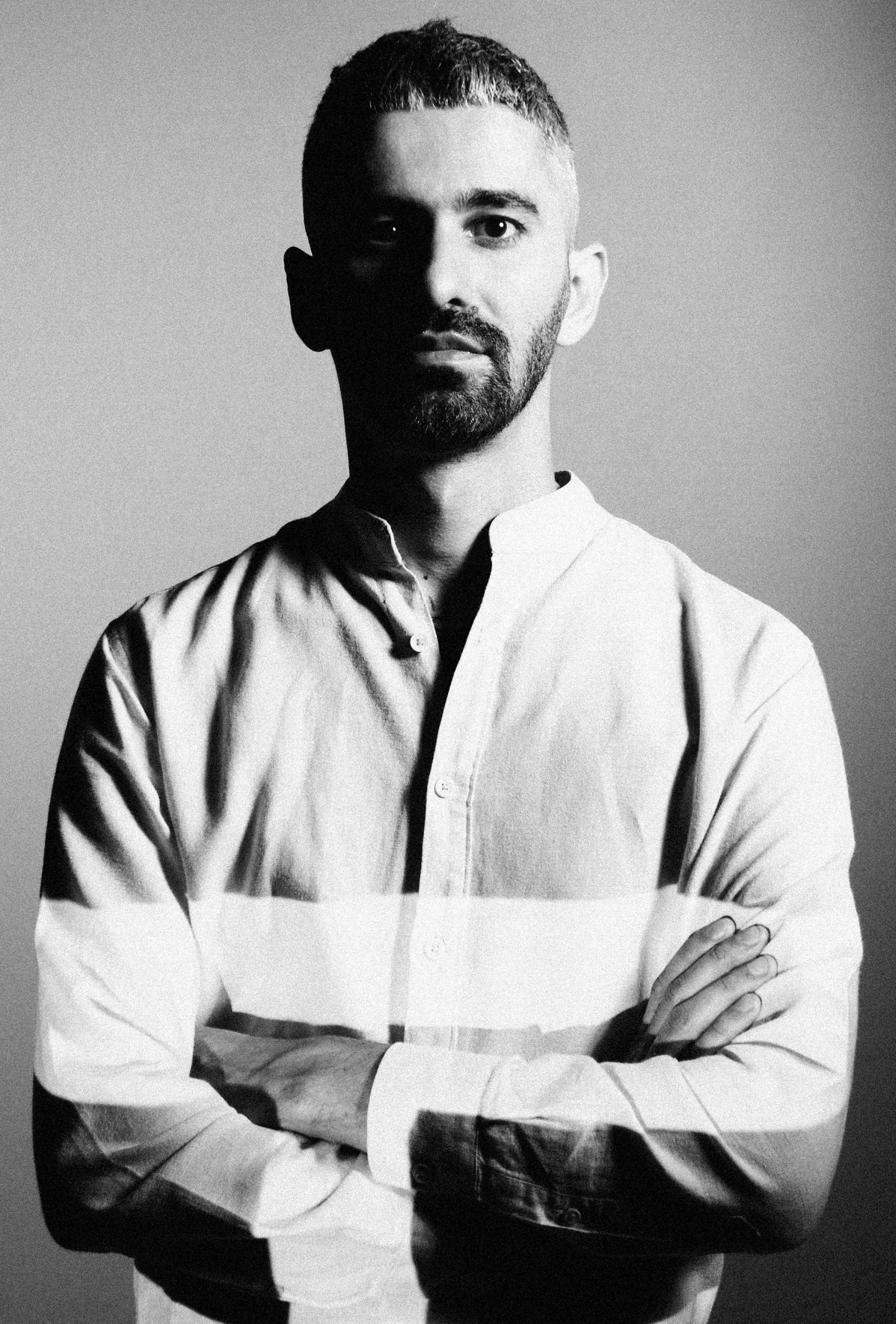
Biography
Orkhan Mammadov (b. 1990, Ganja, Azerbaijan) is a new media artist from Azerbaijan who rose to international prominence after representing his home country at the Venice Biennale in 2019. From an early age, he showed a keen aptitude for both creativity and technology, teaching himself graphic and web design at around ten years old and competing internationally by the time he was sixteen. His formal studies took him across three different universities in multiple countries, where he pursued Computer Science, Visual Communication Design, and Fine Arts—a diverse educational path that laid the groundwork for his interdisciplinary perspective.
Mammadov began his professional career at eighteen as a Web & Graphic Designer, steadily expanding his skill set to include Product Design, Motion Design, Photography, and Video while working as an art and creative director in various agencies and studios. At twenty-three, he debuted his first public art installation, marking his entry into the contemporary art world. Initially focused on generative art, audiovisual media, and interactive installations, he shifted his attention to AI-driven generative art in 2018, culminating in his participation at the Venice Biennale the following year. Over more than a decade of practice, he has mounted eleven solo exhibitions, taken part in twenty-two group shows, and received four international art and technology awards. Through this dynamic journey, Mammadov continues to explore how the digital age redefines cultural interaction, harnessing computational innovation to push creative and conceptual boundaries.
Statement
“Orkhan Mammadov is a trailblazing new media artist from Azerbaijan whose work fuses generative art, artificial intelligence, and data visualization with the richness of his cultural heritage. Best known for representing Azerbaijan at the 2019 Venice Biennale, he captivated audiences by weaving traditional motifs from Middle Eastern art—such as carpet patterns—into cutting-edge data sculptures and AI-generated paintings. By merging time-honored aesthetics with emerging technologies, he bridges past and present and raises timely questions about how rapid technological shifts can both preserve and transform cultural memory.”
Highlights
A short view across the exhibition and recognition records in the archive.
38Artworks14Series37Exhibitions
Start a conversation
For exhibitions, commissions, speaking, press, and institutional enquiries.